


Explore Photogrammetry Software for Architecture and Construction
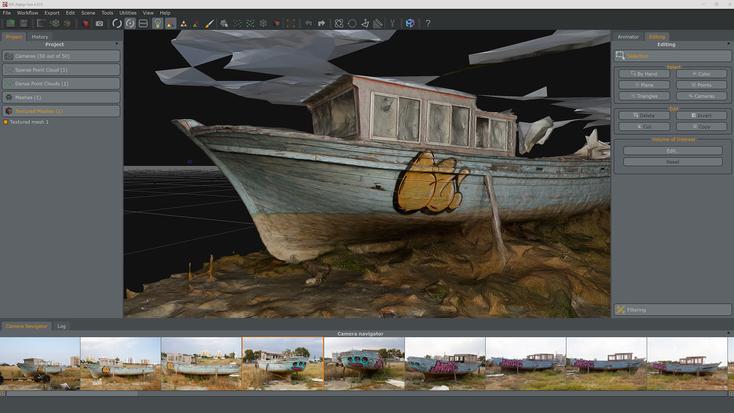
Photogrammetry software has emerged as a pivotal tool in the digital era, bridging the gap between photography and precise spatial analysis. By converting photographs into detailed 3D models or accurate measurements, this technology has revolutionized how industries visualize, document, and analyze the physical world. The photogrammetry software industry has grown alongside advances in camera technology, computing power, and artificial intelligence, offering professionals tools that are more accessible, efficient, and precise than ever before. Today, it plays a crucial role in disciplines ranging from mapping and construction to heritage preservation and virtual simulations.
At its core, photogrammetry software relies on the principle of extracting three-dimensional information from two-dimensional images. By analyzing multiple photographs of a single object or environment, the software identifies common points and reconstructs spatial relationships to generate 3D models, orthophotos, or accurate measurements. Core components of these platforms typically include image processing engines, point cloud generation, mesh reconstruction, texture mapping, and tools for editing and exporting models. Modern solutions often incorporate artificial intelligence and machine learning algorithms to automate feature recognition, improve alignment accuracy, and reduce processing times, making photogrammetry both faster and more precise than traditional surveying methods.
The applications of photogrammetry software span an impressive range of industries. In construction and architecture, it enables accurate site surveys, progress monitoring, and the creation of detailed as-built models. The film and gaming sectors leverage photogrammetry to produce highly realistic 3D environments and characters. Archaeologists and heritage preservationists use it to digitally document historical sites, ensuring their preservation for future generations. In agriculture, it supports precision farming by creating detailed topographical maps and monitoring crop health. Even industries like insurance and mining rely on photogrammetry for risk assessment, damage documentation, and resource management, highlighting its versatility and indispensable value.
Several factors drive the increasing adoption of photogrammetry software. The growing demand for accurate 3D data, combined with the proliferation of drones and high-resolution cameras, has expanded the software’s reach. The need for cost-effective alternatives to traditional surveying methods also encourages organizations to adopt photogrammetry solutions. Cloud computing and AI advancements enhance processing speeds and analytical capabilities, making the technology more efficient and scalable. Additionally, industries are recognizing the value of integrating photogrammetry with other digital tools such as geographic information systems (GIS), building information modeling (BIM), and virtual reality, which amplifies its usefulness across workflows.
Despite its many advantages, photogrammetry software faces challenges and limitations. Achieving high-quality results requires careful image capture and controlled conditions, which may be difficult in dynamic or outdoor environments. Processing large datasets can demand significant computational resources, and even with AI support, human expertise remains necessary to validate and refine models. Legal and privacy concerns may arise when capturing images of public or private spaces. Furthermore, while software tools are becoming more intuitive, mastering advanced features often requires training, which can be a barrier for new users or small businesses.
Innovation in the photogrammetry field continues to reshape the landscape. Real-time 3D reconstruction, improved automation, and the integration of LiDAR data are enhancing the speed and accuracy of model creation. AI-powered feature detection is enabling the software to identify objects and surfaces with minimal human input. Cloud-based photogrammetry platforms allow collaborative projects, enabling teams to process and share data remotely. Mobile and drone-compatible solutions are also expanding the software’s reach, making it easier to capture high-quality images in previously inaccessible areas. These innovations suggest a future where photogrammetry becomes increasingly seamless, accurate, and integrated into everyday workflows.
Regional and industry-specific trends also influence photogrammetry software adoption. Developed regions with advanced infrastructure and technological capabilities tend to adopt these solutions faster, particularly in construction, urban planning, and heritage preservation. Emerging markets are beginning to leverage drones and mobile photogrammetry tools for agriculture, mining, and infrastructure projects. Industries that require detailed visual documentation, such as insurance and forensics, are increasingly recognizing the software’s value for accuracy and efficiency. Cross-industry collaboration is encouraging knowledge transfer, which accelerates adoption and innovation globally.
The future of photogrammetry software appears robust and dynamic. As technology advances, models will become more accurate, processing faster, and fully integrated into digital ecosystems that connect design, analysis, and visualization tools. AI and machine learning will continue to reduce manual intervention while enhancing the quality and intelligence of outputs. With increasing demand for precise, cost-effective, and scalable 3D modeling solutions, photogrammetry software is poised to play an even more central role in shaping how industries capture, analyze, and interpret the physical world. Professionals across sectors can expect continuous improvements in usability, functionality, and accessibility, ensuring that photogrammetry remains an indispensable tool for innovation and efficiency.
Top Trending Reports -
Canada Transaction Monitoring Market Trends

 Arabic
 French
 Spanish
 Portuguese
 Deutsch
 Turkish
 Dutch
Dutch
 Italiano
 Russian
 Romaian
 Portuguese (Brazil)
 Greek
Greek
