


Performance Parameters of Wooden Interior Doors
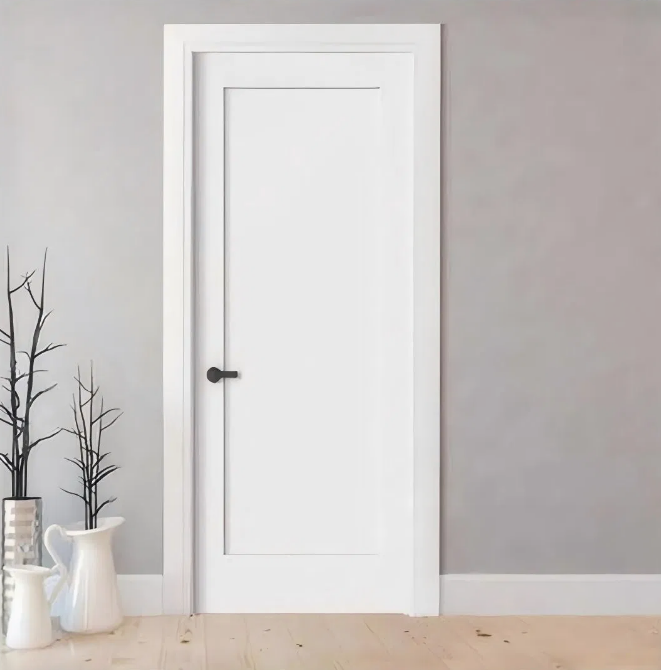
When evaluating Solid Wood Interior Doors, technical specifications are essential for understanding performance differences.
Door thickness typically ranges from 35mm to 45mm. Increased thickness improves sound insulation and structural stability. In some applications, 45mm doors are preferred for enhanced acoustic control.
Wood density is another key parameter. Hardwoods generally range between 600–750 kg/m³, which contributes to higher impact resistance and longer service life.
Moisture content is controlled between 8% and 12%. If this exceeds the range, deformation such as warping or joint cracking may occur over time.
Load-bearing performance is also influenced by door weight. Solid wood doors can reach 70–100 lbs depending on size and species.
Hardware compatibility is critical. Heavier doors require reinforced hinges, typically rated for 80–120 kg load capacity.
Sound insulation is measured in STC (Sound Transmission Class). Solid wood doors generally achieve moderate to high STC values depending on sealing quality and mass.
Thermal expansion is another factor. Expansion gaps of 2–3 mm are typically required to accommodate seasonal changes.
These technical parameters make Solid Wood Interior Doors a performance-driven choice in interior building systems.

 Arabic
 French
 Spanish
 Portuguese
 Deutsch
 Turkish
 Dutch
Dutch
 Italiano
 Russian
 Romaian
 Portuguese (Brazil)
 Greek
Greek
