


Redefining Retail and Consumer Behavior: The Subtle Influence of Proximity and Biometric Sensing in the Modern Shopping Experience
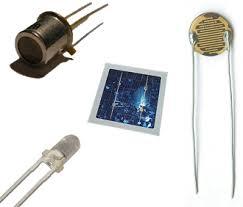
The retail industry is undergoing a quiet revolution as it adopts various technologies from the Sensor Market Share to enhance the customer journey and optimize operations. From the moment a shopper enters a store, sensors are at work—tracking foot traffic patterns to optimize store layouts and using beacons to send personalized offers to smartphones. High-tech retail environments, such as "just walk out" stores, rely on a complex network of shelf sensors and computer vision to track items in real-time, eliminating the need for traditional checkout lines. This level of automation provides retailers with unprecedented data on consumer behavior, allowing them to adjust pricing and inventory with surgical precision. For the consumer, it offers a more seamless and frictionless experience that bridges the gap between the convenience of online shopping and the tactile nature of physical retail.
However, the proliferation of sensors in retail environments brings up significant concerns regarding consumer privacy and consent. Tracking a person's movements and analyzing their facial expressions to gauge their reaction to a product can feel invasive if not handled transparently. As we discuss this, we should look at the importance of "privacy by design," where retailers anonymize data and provide clear value in exchange for the information they collect. There is also the potential for "algorithmic bias" in retail sensors, particularly in biometric systems, which must be addressed to ensure fair treatment for all customers. Despite these challenges, the trend toward more intelligent retail spaces seems inevitable. The future will likely see even deeper integration, such as smart mirrors that can "try on" clothes virtually or sensors that can analyze the chemical composition of fresh produce to ensure quality. The key for retailers will be to use these tools to build trust and enhance the human connection, rather than just treating shoppers as data points.
FAQs: How do "just walk out" stores actually know what I bought? They use a combination of weight sensors on shelves and overhead cameras with AI to track which items are picked up and placed in a shopper's basket. What are RFID tags and how are they different from barcodes? RFID tags use radio waves to transmit data, allowing them to be read from a distance and without a direct line of sight, making inventory tracking much faster than barcodes.
➤➤➤Explore MRFR’s Related Ongoing Coverage In Semiconductor Industry:
Multilayer Printed Circuit Board Market
Musical Instrument Insurance Market
Navigational Inertial Systems Market

 English
 Arabic
 French
 Spanish
 Portuguese
 Deutsch
 Turkish
 Dutch
 Russian
 Romaian
 Portuguese (Brazil)
 Greek
