


The Great Decoupling: How the Banking As A Service Market is Separating Financial Utility from Traditional Institutional Infrastructure
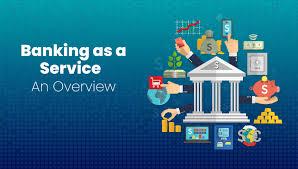
The current transformation within the financial sector is not just about digital apps; it is about a fundamental unbundling of services. The Banking As A Service Market analysis reveals a landscape where licensed banks are no longer the sole gatekeepers of financial products. Instead, they are becoming the "piping" through which non-financial companies—like retailers, airlines, and tech startups—can offer regulated services like checking accounts, debit cards, and lending directly to their own customers. This "embedded finance" movement is driven by the desire for seamless user experiences. When a consumer can get a loan at the point of sale on an e-commerce site or manage a dedicated wallet within a ride-sharing app, the friction of traditional banking disappears. For group discussion, we must consider how this shift redefines brand loyalty. Is the consumer’s relationship now with the interface they use daily, or does the underlying regulated bank still hold the ultimate trust and responsibility in the eyes of the public?
Furthermore, this decoupling allows for massive operational efficiency. Traditional banks often struggle with legacy "spaghetti" code and high overhead costs related to physical branches and manual compliance. By pivoting to a BaaS model, these institutions can monetize their banking license and core infrastructure as a high-margin software service. They essentially become wholesalers of financial utility. Meanwhile, the "front-end" partners can focus entirely on customer acquisition and innovative UI design. This synergy is leading to a hyper-specialized economy where "niche banks" for specific demographics—such as gig workers, immigrants, or eco-conscious consumers—can be launched in a fraction of the time and cost previously required. As we deliberate, we should look at the risks of this layered approach. If a non-financial brand experiences a data breach or goes bankrupt, how clearly can the average consumer distinguish between the brand they see and the bank that actually holds their funds?
FAQ What is the difference between BaaS and traditional banking? Traditional banking involves a direct relationship between a customer and a bank, while BaaS allows non-banks to offer banking services through APIs provided by a licensed institution.
Is my money safe in a BaaS-powered app? Yes, provided the underlying partner is a licensed, insured bank; the funds are typically protected by national deposit insurance schemes up to the legal limit.
➤➤➤Explore MRFR’s Related Ongoing Coverage:
Remote Automotive Exhaust Sensing Market
Fault Detection Classification Market
Ai In Video Surveillance Market
Thermal Management In Consumer Electronics System Market
Autonomous Mobile Robot Market
Asia-Pacific Warehouse Automation Market

 English
 Arabic
 French
 Spanish
 Portuguese
 Deutsch
 Turkish
 Italiano
 Russian
 Romaian
 Portuguese (Brazil)
 Greek
Greek
