


Why Choose Hot Forging over Cold?
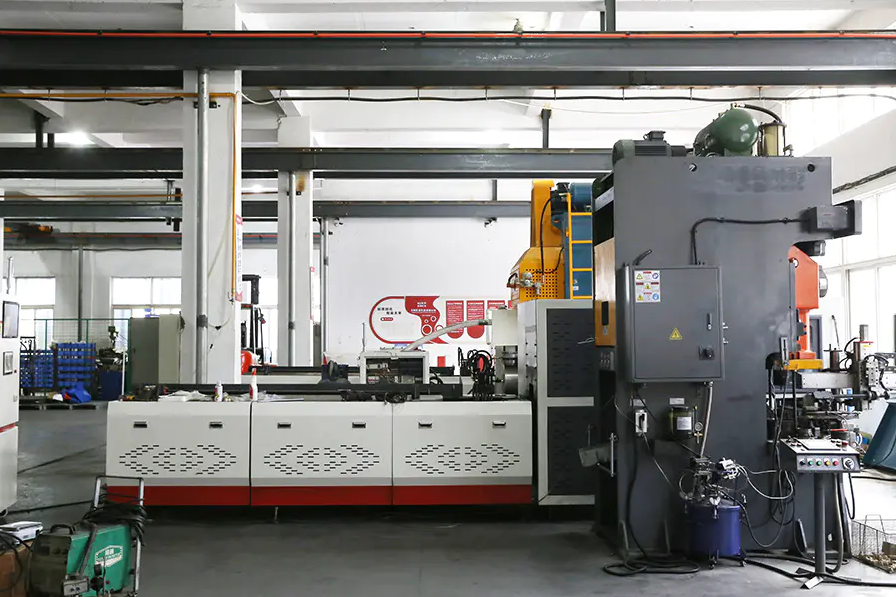
In metal forming discussions, one question often asked by engineers and hobbyists alike is how does hot forging compare with other methods like cold or warm forming? A Hot Forging Machine Tool operates where the metal is heated above its recrystallization temperature and then shaped under pressure. This contrasts with cold forming, where the metal is shaped at or near room temperature.
One key difference between the processes is how they affect material properties. When metal is hot forged, the high temperature coupled with compressive deformation changes the internal grain structure, giving better flow and improved performance under load. On the other hand, cold forging can offer tighter surface finish and dimensional control but often requires more force and is limited in the complexity of shapes it can produce.
Users on manufacturing forums often debate when to use hot forging versus other methods. Some suggest hot forging is suitable for parts that need good toughness and strength, while cold forging may be chosen when surface finish and final dimensions are strict concerns. Warm forging sits between the two, benefiting from both moderate forming temperatures and reasonable tolerance control.
Another point frequently discussed is equipment selection. A Hot Forging Machine has to handle high temperature materials and often includes robust heating and control systems to manage thermal cycles and protect tooling. This complexity influences maintenance and operational planning compared to simpler cold forming presses.
By examining these differences, manufacturers can decide which forging process aligns with their material needs, production volumes, and part design.

 English
 Arabic
 French
 Spanish
 Portuguese
 Deutsch
 Turkish
 Dutch
Dutch
 Russian
 Romaian
 Portuguese (Brazil)
 Greek
Greek
