


Why Does Fluidity Matter for Crack Prevention?
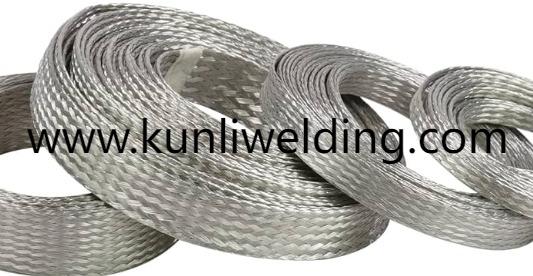
Hot cracking remains one of the most frustrating defects in aluminum fabrication, causing welders to reject parts, repeat work, and lose valuable production time through solidification fissures that compromise structural integrity. This insidious problem occurs during the transition from liquid to solid as weld metal cools, creating cracks that sometimes remain invisible until catastrophic failure reveals their presence. Engineers and metallurgists have long sought solutions to this persistent challenge, leading to development of specialized filler materials designed to modify solidification behavior fundamentally. Aluminum Welding Wire ER4943 represents an advanced composition specifically engineered to combat hot cracking through strategic silicon content that fundamentally alters how molten aluminum transitions to solid metal during the welding process, providing crack resistance that conventional magnesium bearing fillers cannot match.
Understanding the mechanism behind hot cracking helps explain why filler material chemistry matters so critically for preventing this defect. As molten weld metal begins solidifying, it contracts while simultaneously developing mechanical strength through crystal formation. During a critical temperature range between liquidus and solidus points, the material exists in a semi solid state where dendrites have formed but liquid metal films remain along grain boundaries. Thermal contraction generates tensile stresses within this mushy zone, and when these stresses exceed the limited strength the partially solidified material possesses, cracks open along weak liquid grain boundary films separating individual grains.
Silicon additions fundamentally modify aluminum solidification characteristics by creating near eutectic compositions that narrow the solidification temperature range dramatically. Pure aluminum and magnesium rich alloys exhibit wide mushy zones where material remains vulnerable to cracking throughout extended cooling periods as thermal contraction continues pulling grains apart. Adding silicon shifts the alloy composition toward eutectic behavior where liquid transforms to solid across a much narrower temperature interval, compressing the vulnerable period during which thermal contraction can tear apart the semi solid structure. This compressed solidification range reduces the time window during which cracking can initiate, significantly lowering hot cracking risk even under restraint conditions that would crack conventional filler materials.
Grain structure refinement represents another crack resistance mechanism that silicon bearing compositions provide through their influence on nucleation and growth during solidification. The presence of silicon promotes formation of finer, more numerous grains during freezing compared to coarser structures that develop with purely magnesium based fillers lacking silicon additions. These refined grain structures distribute thermal contraction stresses across more grain boundaries, reducing the localized stress concentration at any single boundary that could initiate cracking. Additionally, the increased grain boundary area provides more paths for liquid feeding during solidification, allowing molten metal to flow into developing shrinkage voids before they evolve into cracks that compromise weld integrity.
Weld pool fluidity improvements from silicon content enhance crack resistance indirectly by promoting better gap filling and fusion characteristics. Improved fluidity allows the molten pool to flow into joint gaps and irregularities more readily, reducing the geometric stress concentrations that contribute to cracking initiation. The enhanced wetting characteristics ensure intimate contact between filler and base metal, minimizing the shrinkage voids and lack of fusion defects that can serve as crack initiation sites providing starting points for fissure propagation. This improved flow behavior proves particularly valuable in restrained joint geometries where gap bridging capability determines whether successful fusion occurs without cracking.
Solidification mode transitions affect grain boundary chemistry in ways that influence cracking susceptibility throughout the vulnerable temperature range. Alloys solidifying through certain crystallographic sequences develop continuous liquid films along grain boundaries that persist to lower temperatures, maintaining crack vulnerability throughout extended cooling periods as thermal contraction continues. Silicon bearing compositions modify the solidification path to promote earlier formation of coherent grain boundary structures that resist separation under thermal stress, changing the fundamental solidification sequence in ways that enhance crack resistance. This altered solidification behavior reduces the temperature range during which weak liquid films compromise grain boundary strength and promote crack propagation.
Thermal expansion coefficient matching between filler and base metal minimizes the differential contraction that generates internal stresses during cooling from welding temperatures. When filler material contracts at substantially different rates than surrounding base metal, interface stresses develop that can exceed the cohesive strength of the partially solidified weld metal. The balanced aluminum silicon magnesium chemistry produces thermal expansion behavior compatible with common aluminum alloy families, reducing these thermally induced stresses that contribute to cracking when compositional mismatches create excessive contraction differentials.
Restraint tolerance improvements allow silicon bearing compositions to succeed in joint configurations that would crack consistently using conventional magnesium fillers lacking silicon additions. Highly restrained conditions where surrounding base metal rigidly constrains weld metal contraction create the most severe cracking challenges in aluminum fabrication. Thick sections, complex joint geometries, and fixtures holding components in fixed positions all increase restraint levels that promote hot cracking. The crack resistant characteristics silicon bearing compositions provide enable successful welding in situations where purely magnesium based fillers consistently fail despite optimized welding parameters and technique.
Post weld heat treatment compatibility ensures that crack resistance persists beyond initial solidification when subsequent thermal cycles occur. Some aluminum alloys undergo additional heating for stress relief or precipitation hardening after welding, and these thermal cycles can reopen solidification cracks or create new heat affected zone cracks if weld metal chemistry lacks adequate crack resistance throughout the temperature ranges these treatments impose. The stable microstructure silicon bearing compositions produce maintains crack resistance through post weld thermal processing, preventing delayed failure during downstream manufacturing operations.
Repair welding scenarios particularly benefit from enhanced crack resistance because existing structures often contain residual stresses, prior weld repairs using incompatible materials, and service induced damage that elevates cracking risk beyond what new construction presents. The forgiving nature silicon bearing compositions exhibit improves repair success rates in field conditions where controlling all variables proves impossible and crack sensitive materials would fail repeatedly.
Economic benefits extend beyond reduced scrap rates to include decreased inspection costs and improved production scheduling reliability when crack related rejections no longer disrupt manufacturing flow unpredictably.
The metallurgical principles underlying silicon bearing crack resistant compositions demonstrate how strategic alloy design addresses specific welding challenges through fundamental modification of solidification behavior rather than relying solely on parameter optimization. Technical resources and crack resistant aluminum welding wire products supporting challenging fabrication requirements are available at https://kunliwelding.psce.pw/8hpj2n for operations seeking improved welding reliability and reduced defect rates.

 English
 Arabic
 French
 Spanish
 Deutsch
 Turkish
 Dutch
Dutch
 Italiano
 Russian
 Romaian
 Portuguese (Brazil)
 Greek
Greek
