


Home Health Services Billing and Coding Services: A Complete Guide for Accurate Reimbursement
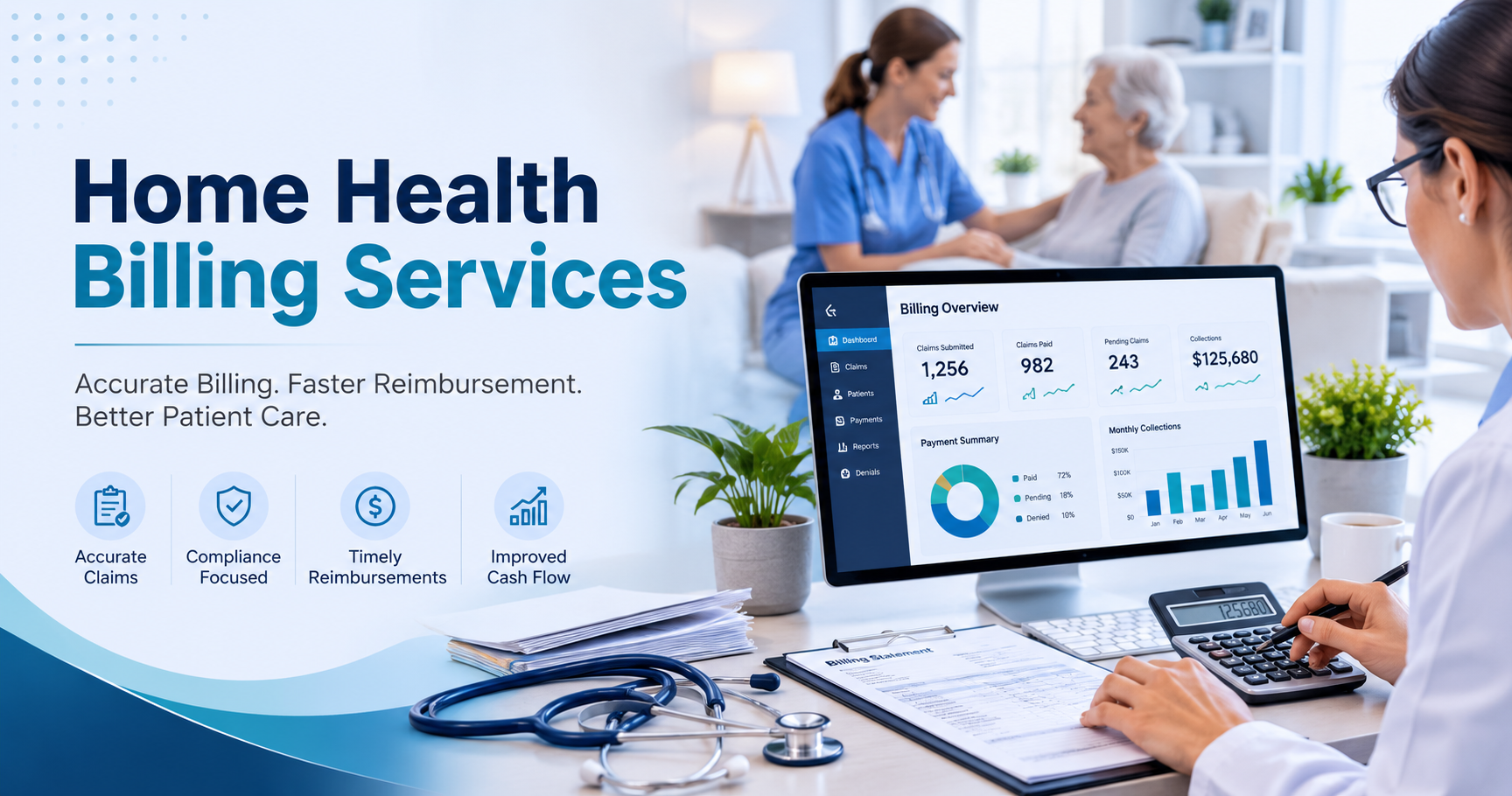
Home health agencies provide essential care to patients who need medical support in the comfort of their own homes. While delivering quality care is the primary responsibility of a home health provider, accurate billing and coding are equally important for maintaining a healthy revenue cycle. Errors in documentation, coding, claims submission, or payer requirements can result in delayed payments, denials, and unnecessary administrative work.
Home health services billing and coding services help agencies manage the complex financial and administrative processes involved in submitting claims and receiving appropriate reimbursement. By combining accurate medical coding with organized billing processes, providers can improve claim accuracy, reduce avoidable errors, and spend more time focusing on patient care.
What Are Home Health Services Billing and Coding Services?
Home health services billing and coding services involve translating documented patient care into appropriate medical codes and submitting accurate claims to insurance payers. The process typically begins with reviewing clinical documentation and determining which services, diagnoses, and procedures are supported by the patient's records.
Medical coders assign the appropriate codes based on the documentation, while billing professionals use that information to prepare and submit claims. The process may also include eligibility verification, claim tracking, denial management, payment posting, and accounts receivable follow-up.
Because home health care involves multiple documentation and reimbursement requirements, billing and coding require careful attention to detail. A small inconsistency between clinical documentation and the submitted claim can create problems during payer review.
Why Accurate Home Health Billing and Coding Matter
Accurate billing and coding are essential for maintaining an efficient revenue cycle. Home health providers depend on timely reimbursement to support staffing, clinical operations, technology, and other business expenses.
Reducing Claim Errors
Incorrect patient information, missing documentation, coding inconsistencies, or inaccurate claim details can lead to rejected or denied claims. A structured billing and coding process helps identify potential errors before claims are submitted.
Supporting Timely Reimbursement
Clean and complete claims are easier for payers to process. When claims contain accurate information and meet applicable requirements, providers can reduce unnecessary delays caused by avoidable billing issues.
Improving Revenue Cycle Management
Billing does not end when a claim is submitted. Agencies need to monitor claim status, respond to payer requests, post payments, and follow up on unpaid balances. Effective billing support creates a more organized revenue cycle from claim creation through final payment.
Maintaining Documentation Consistency
Coding should reflect the services and diagnoses supported by the patient's documentation. Professional coding review helps ensure that submitted claims are consistent with available records rather than relying on assumptions or unsupported information.
Key Components of Home Health Services Billing and Coding
A comprehensive billing and coding process includes several connected activities. Each step contributes to accurate claim submission and efficient revenue management.
Patient Eligibility and Insurance Verification
Before services are billed, verifying patient demographics and insurance information can help identify potential coverage issues. Eligibility verification may include reviewing the patient's insurance status, payer information, and applicable coverage requirements.
Accurate information at the beginning of the billing process can help prevent avoidable claim problems later.
Medical Coding
Medical coding converts documented clinical information into standardized diagnosis and service codes. Coders must carefully review documentation to determine which codes are supported.
For home health agencies, coding accuracy is particularly important because the patient's medical condition, care requirements, and documented services can affect how claims are processed.
Claim Preparation and Submission
After coding is completed, billing staff prepare claims with the required patient, provider, service, and payer information. Claims are then submitted through the appropriate electronic or administrative process.
Before submission, a quality review can help identify missing fields, inconsistencies, or other potential problems.
Payment Posting
Once payments or payer responses are received, payment information must be accurately recorded in the billing system. Proper payment posting allows agencies to maintain current account balances and identify outstanding amounts.
Denial Management
Denied claims require investigation rather than simply resubmission. Billing specialists may review the denial reason, examine the original claim and supporting documentation, correct eligible errors, and determine the appropriate next action.
A consistent denial management process can help agencies identify recurring problems and improve future claim submissions.
Accounts Receivable Follow-Up
Unpaid claims can remain outstanding when payer responses are delayed, additional information is required, or a claim encounters an issue. Accounts receivable follow-up helps identify these balances and determine what action is needed.
Regular monitoring is important because unresolved accounts can affect overall cash flow.
Common Challenges in Home Health Billing and Coding
Home health billing can be challenging because agencies must coordinate clinical documentation, coding, billing, payer requirements, and financial follow-up.
Complex Documentation Requirements
Billing and coding depend heavily on documentation. If records do not clearly support the services provided, coders and billers may have difficulty determining how the claim should be prepared.
Maintaining complete, consistent, and timely documentation can make the billing process more efficient.
Coding Errors
Coding errors can occur when information is misunderstood, documentation is incomplete, or codes are selected without sufficient support. Regular coding quality reviews can help identify patterns and improve accuracy.
Claim Denials and Rejections
Rejected or denied claims can create additional administrative work. Each issue needs to be reviewed to determine whether the problem relates to eligibility, documentation, coding, claim information, or payer requirements.
Changing Payer Requirements
Payer policies and billing requirements can change over time. Home health agencies therefore need processes for monitoring relevant requirements and updating internal billing procedures when necessary.
How Professional Billing Support Helps Home Health Agencies
Outsourcing billing and coding can give home health agencies access to specialized administrative support without requiring the agency to manage every revenue cycle function internally.
A professional team can assist with coding review, claim preparation, submission, payment posting, denial follow-up, and accounts receivable management.
Greater Administrative Efficiency
When billing responsibilities are handled by experienced professionals, clinical and administrative teams can spend less time managing repetitive claim-related tasks.
Better Claim Quality
A structured review process can help identify billing and coding inconsistencies before they become larger revenue cycle problems.
Organized Denial Follow-Up
Denial management requires consistent monitoring and documentation. Professional billing support can help agencies maintain organized follow-up processes and address outstanding claims systematically.
Scalable Support
Billing needs can change as an agency grows, adds providers, serves more patients, or expands its services. External billing support can provide additional administrative capacity without requiring the organization to build every function internally.
Best Practices for Home Health Billing and Coding
Home health agencies can strengthen their billing processes by establishing consistent procedures across the revenue cycle.
First, maintain accurate patient and insurance information. Demographic or payer errors can create problems before coding is even considered.
Second, make sure coding is based on available documentation. Coders should not select codes based on assumptions or information that is not supported by the patient's records.
Third, review claims before submission. A pre-submission quality check can identify missing or inconsistent information.
Fourth, track denials and identify recurring causes. If the same type of billing problem occurs repeatedly, correcting the underlying process may be more effective than addressing each denial individually.
Finally, monitor accounts receivable regularly. Outstanding claims should be reviewed according to an organized follow-up process so that unresolved balances do not remain unnoticed.
How to Choose Home Health Billing and Coding Services
Selecting a billing partner requires more than comparing service prices. Home health agencies should evaluate the provider's experience, processes, communication, and ability to support the organization's specific billing requirements.
Consider whether the service provider offers both coding and billing support, maintains clear communication, provides claim status updates, and has a defined approach to denial and accounts receivable management.
It is also useful to understand how the provider handles documentation review, quality assurance, payer requirements, data security, and reporting.
A reliable billing partner should function as an extension of the agency's administrative team rather than simply submitting claims.
Frequently Asked Questions
What do home health billing and coding services include?
Services may include eligibility verification, medical coding, claim preparation, electronic claim submission, payment posting, denial management, accounts receivable follow-up, and billing reports.
Why do home health claims get denied?
Denials can result from issues such as inaccurate information, documentation problems, coding errors, eligibility concerns, or payer-specific requirements. The exact reason depends on the claim and payer response.
Can home health agencies outsource billing and coding?
Yes. Agencies can work with external billing and coding providers to manage some or all of their revenue cycle activities. The appropriate approach depends on the agency's size, internal resources, workflow, and administrative needs.
How can agencies improve billing accuracy?
Agencies can improve accuracy by maintaining complete documentation, verifying patient and insurance information, using qualified coding professionals, reviewing claims before submission, monitoring denials, and regularly following up on unpaid claims.
Conclusion
Effective home health services billing and coding services play an important role in maintaining an organized and efficient revenue cycle. From accurate coding and claim submission to denial management and accounts receivable follow-up, every stage requires attention to detail and consistency.
For home health agencies, professional Medical Billing Services can provide valuable administrative support while helping establish a structured approach to billing, coding, and payment management. By choosing a knowledgeable billing partner and maintaining strong documentation and review processes, agencies can reduce avoidable administrative challenges and create a more dependable billing workflow.

 English
 French
 Spanish
 Portuguese
 Deutsch
 Turkish
 Dutch
Dutch
 Italiano
 Russian
 Romaian
 Portuguese (Brazil)
 Greek
Greek
