


How to Choose the Right Behavioral Health Billing Company in the USA
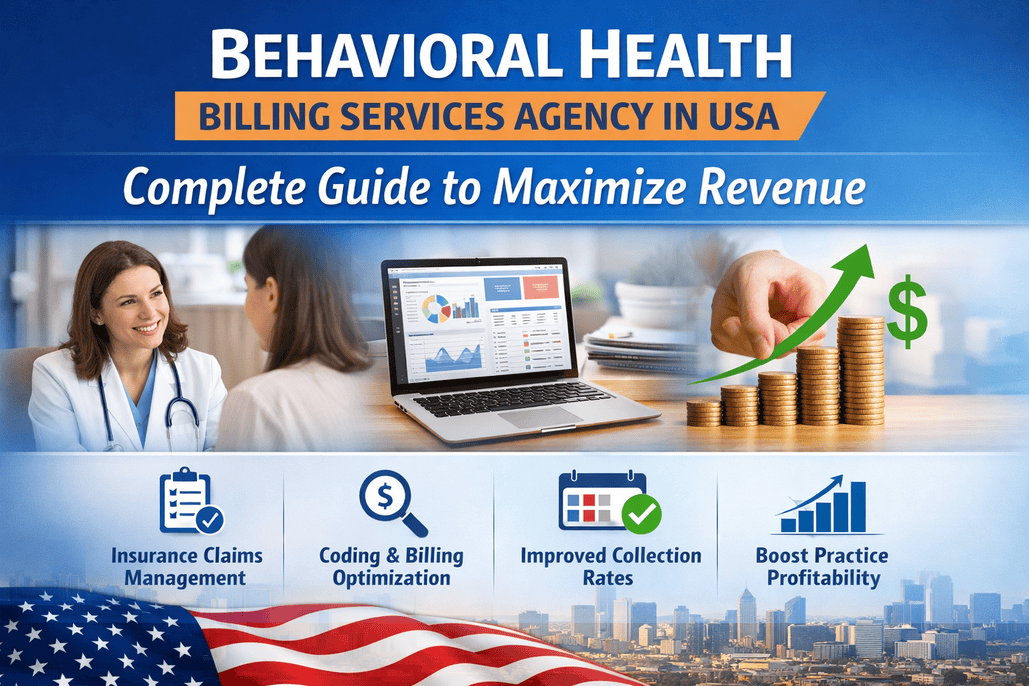
If you are running a mental health practice, your primary focus is—and should always be—your patients. Whether you are a solo therapist, a clinical psychologist, or managing a large psychiatric facility, the daily demands of patient care are overwhelming enough. Yet, at the end of the day, you still have to deal with the mountain of paperwork, insurance claims, and follow-ups required to keep your practice financially alive.
This is where the frustration usually begins. Billing for mental health services is not the same as billing for a standard doctor’s visit. It is highly nuanced, strictly regulated, and incredibly prone to claim denials. For many practices, partnering with a specialized behavioral health billing company becomes not just a convenience, but a critical necessity to survive and thrive.
In this comprehensive guide, we will explore exactly why mental health billing is uniquely challenging, what you should look for in a billing partner, and how outsourcing can dramatically improve the financial health of your practice.
Why Behavioral Health Billing is a Different Ballgame
You might wonder why a general billing agency struggles when handling accounts for therapists and psychiatrists. The answer lies in the specific rules that insurance providers apply to mental health.
Unlike a visit to a general practitioner, which usually involves a straightforward diagnosis and a standard flat-rate fee, behavioral health visits are heavily tied to time, setting, and treatment constraints.
The Time Factor in Therapy
In mental health, minutes matter. A therapy session that lasts 45 minutes uses a completely different billing code than one that lasts 60 minutes. If a therapist accidentally documents a session as 50 minutes but uses the code for a 60-minute session, the insurance company will flag it, deny the claim, and potentially trigger an audit. Keeping track of these exact timeframes across multiple patients every single day leaves massive room for human error.
Strict Pre-Authorizations and Session Limits
Many insurance plans place strict caps on behavioral health services. A patient might be authorized for only ten therapy sessions a year. If your front office does not meticulously track these visits and you see the patient for an eleventh session, the insurance company will simply refuse to pay. Getting prior authorizations for extended treatments, intensive outpatient programs (IOP), or specialized psychiatric care requires fighting through miles of red tape.
The Stigma and Privacy Concerns
Behavioral health records are protected under even stricter privacy guidelines than standard medical records. Dealing with insurance representatives to justify a patient’s need for ongoing therapy without violating HIPAA or compromising patient trust requires a delicate, highly professional approach.
The Cost of Claim Denials in Mental Health
When an insurance claim is denied, it does not just mean delayed payment; it means an active loss of revenue. Your administrative staff must now spend hours reviewing the claim, calling the insurance company, waiting on hold, fixing the error, and resubmitting the paperwork.
Common reasons for denials in behavioral health include:
-
Incorrect use of modifiers.
-
Lack of prior authorization.
-
Typographical errors in patient information.
-
Filing the claim past the insurance company’s deadline.
-
Using outdated diagnostic codes.
Every denied claim chips away at your practice's profitability. A dedicated behavioral health billing company understands these specific pitfalls and puts safety nets in place to catch errors before the claim is ever submitted.
Key Benefits of Partnering With a Specialized Billing Team
Deciding to hand over your financial operations to an outside firm is a big step. However, the benefits quickly become apparent once the transition is complete.
1. Reclaiming Your Time for Patient Care
The most immediate benefit is time. Therapists often report spending up to a third of their week handling paperwork and battling insurance companies. By outsourcing this workload, you get those hours back. You can use that time to see more patients, expand your practice, or simply take a well-deserved break to prevent professional burnout.
2. Drastically Reducing Claim Errors
Specialized billing teams have built-in scrubbing processes. Before a claim leaves their system, software and human experts check it for the exact errors that trigger denials. This means your first-pass acceptance rate (the percentage of claims paid on the first try) skyrockets.
3. Faster and More Consistent Cash Flow
Because there are fewer errors and faster submissions, payments come in predictably. You are no longer waiting months to get paid for a session you conducted in the spring. Steady cash flow allows you to pay your staff on time, upgrade your clinic, and plan for the future without financial anxiety.
Core Services Your Billing Partner Must Offer
Not all billing companies are created equal. When searching for a partner in the USA, you need to ensure they offer a full suite of services that cover the entire lifespan of a patient's account.
Comprehensive Revenue Cycle Management
A good partner does more than just submit claims; they manage the entire financial ecosystem of your practice. Effective revenue cycle management starts the moment a patient schedules an appointment and doesn't end until the final balance is paid in full. This includes checking patient eligibility before the visit, collecting co-pays, submitting claims, handling denials, and managing patient invoicing.
Expert Medical Coding Services
As mentioned earlier, coding in mental health is tricky. You need a team that provides expert medical coding services specifically trained in the latest DSM-5 and ICD-10 updates. They need to know the difference between standard psychotherapy, crisis management, and interactive complexity, ensuring every service you provide is accurately represented and fully reimbursed.
Reliable Medical Billing Services
The actual process of formatting, submitting, and tracking claims requires precision. Top-tier medical billing services will aggressively follow up on unpaid claims. They do not just accept a denial; they investigate the cause, correct the issue, and fight the insurance company to ensure you receive the compensation you earned.
Seamless Credentialing
Before you can even bill an insurance company, you must be in their network. The process of getting paneled with major insurers like Blue Cross Blue Shield, Aetna, or Medicare is notoriously slow and tedious. A strong billing partner handles your credentialing from start to finish. They gather your documentation, submit the applications, and constantly follow up with the insurance panels so you don't have to.
In-House Billing vs. Outsourcing: Making the Call
Many practice owners struggle with the decision of whether to hire an in-house biller or outsource to an agency. Let's break down the realities of both.
The Illusion of Control with In-House Billing
Having a biller sitting in your front office feels secure. You can walk up to their desk and ask about a specific account. However, an in-house employee comes with overhead costs: salary, health benefits, paid time off, and training. Furthermore, if that one employee gets sick, goes on vacation, or quits abruptly, your cash flow completely stops until you can hire and train a replacement.
The Reliability of Outsourcing
When you hire an outsourced company, you are hiring an entire team. If one biller is out sick, another steps in immediately. There are no vacations that halt your revenue. Additionally, agencies invest heavily in the latest billing software and cybersecurity measures, expenses that would otherwise fall on your shoulders.
For practices looking for a stable, experienced partner, reaching out to an established firm like 247 Medical Billing Services can provide the peace of mind needed to scale smoothly. They bring the expertise of a large-scale operation directly to your local practice, adapting to your specific workflow.
Navigating the Future: Telehealth and Compliance
The landscape of behavioral health changed forever over the last few years, primarily due to the explosion of telehealth. While virtual therapy has made care incredibly accessible, it has made billing significantly more complicated.
Telehealth Modifiers and Place of Service Codes
Billing for a video session is not the same as billing for an in-person visit. Depending on the insurance payer and the state you are operating in within the USA, you must use specific modifiers (like modifier 95) and specific Place of Service (POS) codes (like POS 02 or POS 10). If these are missing or mismatched, the claim is instantly denied.
Furthermore, post-pandemic regulations are constantly shifting. Some insurance companies have rolled back their telehealth coverage, while others have expanded it. A specialized behavioral health billing company stays ahead of these legislative changes. They update their systems instantly so that your practice never misses a beat—or a payment.
Staying Compliant to Avoid Audits
Audits are the nightmare of any medical practice. In mental health, audits often occur if an insurance company notices a high volume of long therapy sessions or repetitive billing codes. A professional billing team keeps your practice compliant by ensuring your clinical documentation matches the codes being billed. They act as a shield, ensuring your practice is always prepared should an insurance company request a review of your records.
Summary: A Partnership for Growth
Running a behavioral health practice in the USA is a noble, demanding profession. You deal with heavy emotional burdens daily to help your community heal. You should not have to spend your evenings fighting with insurance portals or deciphering cryptic denial codes.
By carefully selecting a behavioral health billing company that understands the unique rhythms of mental health care, you protect your practice's financial future. You gain back your time, reduce administrative friction, and create an environment where you and your staff can focus entirely on what truly matters: changing lives for the better.
Frequently Asked Questions (FAQs)
1. What exactly does a behavioral health billing company do?
A behavioral health billing company manages the financial operations of a mental health practice. This includes verifying patient insurance benefits, submitting claims, tracking payments, fixing and appealing denied claims, and billing patients for their portion of the cost. They specialize in the unique codes and rules associated with therapy and psychiatry.
2. How much do specialized medical billing companies charge?
Most billing companies charge a percentage of the total revenue they successfully collect for your practice. This typically ranges from 4% to 8%, depending on the size of your practice and the scope of services required. Some may charge a flat monthly fee or a per-claim fee, but a percentage-based model is most common as it incentivizes the biller to collect every dollar you are owed.
3. Will outsourcing my billing confuse my patients?
Not if it is done correctly. Good billing companies act as a seamless extension of your practice. They handle patient inquiries with professionalism and compassion. Many provide dedicated phone lines so that when patients call with a billing question, they are greeted warmly and receive clear, helpful answers without ever realizing they are speaking to an outside agency.
4. How difficult is the transition from in-house to outsourced billing?
The transition process usually takes between 30 to 60 days. A reputable billing company will have an onboarding team dedicated to migrating your patient data, securing access to your Electronic Health Records (EHR) system, and establishing new workflows. While there is a brief learning curve, the long-term efficiency gained far outweighs the temporary adjustment period.
5. Can a billing company help me get onto new insurance panels?
Yes. Many comprehensive billing partners offer specialized credentialing services. They will handle the massive amounts of paperwork required to apply to new insurance networks, track the application status, and manage the re-credentialing process that occurs every few years to ensure you remain an active provider in-network.
6. Do billing companies handle Medicare and Medicaid claims?
Absolutely. Medicare and Medicaid have some of the most stringent and complex billing guidelines in the healthcare industry. A high-quality behavioral health billing partner will have specific experts on staff who understand the exact modifiers, authorization rules, and filing deadlines required to successfully process government-funded claims.
7. What happens if an insurance company denies a claim?
If a claim is denied, your billing partner will immediately review the denial reason. They will correct any missing or inaccurate information, attach necessary clinical documentation if requested, and resubmit the claim or file a formal appeal. Their goal is to overturn the denial and secure your payment as quickly as possible without you having to lift a finger.

 English
 Arabic
 French
 Spanish
 Portuguese
 Deutsch
 Dutch
Dutch
 Italiano
 Russian
 Romaian
 Portuguese (Brazil)
 Greek
Greek
