


US Fashion Industry 2031: Product Lifecycle Management Trends Explained
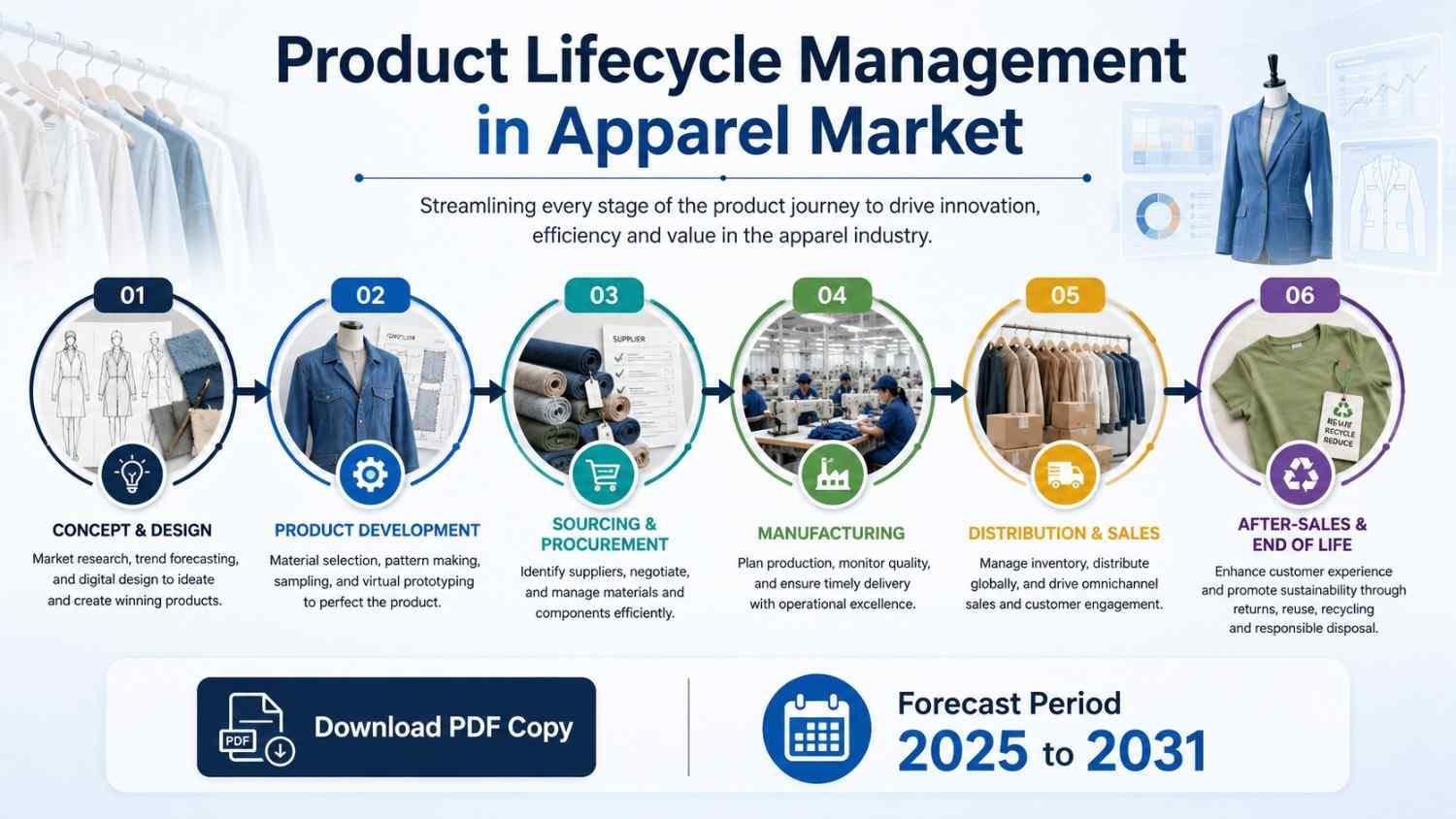
Product Lifecycle Management (PLM) in the U.S. apparel market plays a critical role in streamlining the entire fashion value chain, from initial design and product development to sourcing, manufacturing, distribution, and retail execution. As the U.S. fashion industry becomes increasingly digital and consumer-driven, PLM systems are being widely adopted to improve collaboration among design teams, suppliers, and retailers while reducing time-to-market and production costs.
The product lifecycle management in apparel market size is projected to reach US$ 2.98 billion by 2031 from US$ 1.16 billion in 2023. The market is expected to register a CAGR of 12.5% in 2023–2031.
Key Drivers
Several factors are driving the adoption of PLM systems in the apparel market:
- Increased Demand for Customization: Consumers are increasingly seeking personalized apparel options. PLM solutions enable brands to efficiently manage custom orders and respond to market trends.
- Technological Advancements: Innovations in software technology, such as AI and machine learning, are enhancing PLM capabilities. These technologies allow for better data analysis, predictive modeling, and improved decision-making processes.
- Sustainability Initiatives: With a growing emphasis on sustainability, brands are using PLM to track materials, manage resources effectively, and reduce waste throughout the product lifecycle.
- Globalization of Supply Chains: As brands expand their reach globally, PLM systems facilitate better communication and collaboration among diverse teams and suppliers, ensuring a seamless workflow.
Opportunities
The apparel industry presents numerous opportunities for PLM providers:
- Emerging Markets: Regions such as Asia-Pacific and Latin America are witnessing rapid growth in the apparel sector. PLM providers can tailor their solutions to meet the specific needs of these markets.
- Integration with IoT: The integration of IoT devices with PLM systems can provide real-time data on inventory levels, production status, and consumer preferences, enhancing decision-making.
- Cloud-Based Solutions: The shift towards cloud-based PLM solutions offers scalability and flexibility, allowing companies to adapt quickly to changing market conditions.
Segmentation
The PLM market in the apparel industry can be segmented based on:
- Deployment Type:
- On-Premises
- Cloud-Based
- Small and Medium Enterprises (SMEs)
- Large Enterprises
- North America
- Europe
- Asia-Pacific
- Latin America
- Middle East and Africa
Market Report Scope
The report on the Product Lifecycle Management in the apparel market provides a comprehensive analysis of the current market landscape, key trends, and future outlook. It includes detailed insights into market dynamics, competitive landscape, and growth opportunities. The report covers:
- Market size and forecast
- Analysis of key players and their strategies
- Market trends and developments
- Challenges and risks in the PLM market
Market News and Recent Developments
Recent developments in the PLM market include:
- Acquisitions and Mergers: Leading PLM providers are acquiring smaller firms to enhance their technological capabilities and expand their service offerings.
- Partnerships: Collaborations between technology firms and apparel brands are becoming more prevalent, aimed at developing innovative PLM solutions that cater to specific industry needs.
- Product Innovations: Continuous improvements in software functionalities, such as enhanced user interfaces and advanced analytics, are helping brands maximize the benefits of PLM systems.
Market Analysis and Competitive Landscape
The competitive landscape of the PLM market in the apparel sector is characterized by the presence of several key players, including:
- PTC Inc.: A leader in PLM solutions, PTC offers robust software that integrates design, manufacturing, and service processes.
- Siemens AG: Siemens provides comprehensive PLM solutions that enable apparel brands to optimize their product development processes.
- Dassault Systèmes: Known for its 3D design software, Dassault Systèmes offers PLM solutions that enhance collaboration and innovation in apparel design.
- Gerber Technology: Specializing in software and automation solutions, Gerber Technology supports the apparel industry with integrated PLM tools.
- Lectra: Lectra focuses on providing cutting-edge technology solutions for the apparel and fashion industries, including PLM systems.
Future Outlook
As the apparel industry continues to evolve, the demand for sophisticated PLM solutions will grow. Companies that embrace technological advancements and focus on sustainability will be better positioned to succeed in this competitive landscape. The integration of AI, IoT, and cloud-based solutions will further enhance the capabilities of PLM systems, allowing brands to respond swiftly to market changes and consumer demands.
Frequently Asked Questions
1. What is Product Lifecycle Management (PLM) in the apparel industry?
PLM in the apparel industry refers to the management of a product's lifecycle from conception to disposal, encompassing design, manufacturing, and service processes. It aims to improve efficiency and collaboration within the supply chain.
2. How does PLM contribute to sustainability in apparel?
PLM helps brands track materials, manage resources effectively, and reduce waste throughout the product lifecycle, thereby supporting sustainability initiatives.
3. What are the key benefits of adopting PLM solutions?
The key benefits include increased efficiency, improved collaboration, enhanced data analysis, better customization options, and streamlined supply chain management.
The Insight Partners provides comprehensive syndicated and tailored market research services in the healthcare, technology, and industrial domains. Renowned for delivering strategic intelligence and practical insights, the firm empowers businesses to remain competitive in ever-evolving global markets.
• Email: sales@theinsightpartners.com
• Website: theinsightpartners.com
• Phone: +1-646-491-9876

 English
 French
 Spanish
 Portuguese
 Deutsch
 Turkish
 Dutch
 Italiano
 Russian
 Romaian
 Portuguese (Brazil)
 Greek
