


Billing for Behavioral Health Services in the USA: Proven Strategies to Improve Revenue and Reduce Claim Denials
Introduction
The demand for behavioral healthcare across the USA has grown significantly over the last decade. From counseling and psychotherapy to substance use treatment and psychiatric care, providers are serving more patients than ever before. While the need for quality care continues to increase, managing the financial side of a behavioral health practice remains a challenge.
Accurate billing for behavioral health services plays a critical role in maintaining financial stability, ensuring compliance, and supporting long-term growth. Unfortunately, many providers face claim denials, coding errors, reimbursement delays, and complex payer requirements that can negatively impact revenue.
Understanding how behavioral health billing works and implementing best practices can help providers improve collections, reduce administrative burdens, and focus more on patient care. This article explores the key aspects of behavioral health billing, common challenges, and practical solutions that can strengthen revenue performance.
Understanding Behavioral Health Billing
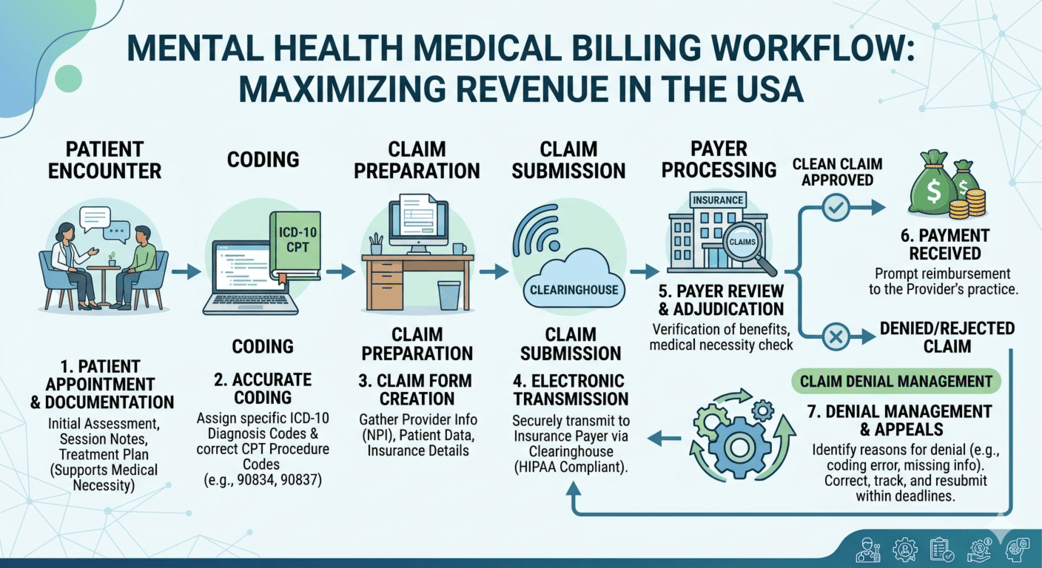
Behavioral health billing involves submitting claims for mental health, psychiatric, counseling, and substance abuse treatment services provided to patients. Unlike many other medical specialties, behavioral healthcare often requires extensive documentation, strict authorization requirements, and frequent updates to payer policies.
The billing process includes:
- Patient eligibility verification
- Prior authorization management
- Accurate coding
- Claim submission
- Payment posting
- Denial management
- Revenue tracking
Because behavioral health services vary widely in duration, treatment plans, and payer requirements, billing accuracy becomes essential for timely reimbursement.
Why Billing for Behavioral Health Services Is More Complex
Many healthcare providers assume behavioral health claims follow the same process as general medical claims. However, behavioral healthcare has unique challenges that require specialized knowledge.
Frequent Changes in Insurance Policies
Insurance carriers often revise mental health coverage guidelines, reimbursement rules, and authorization requirements. Missing these updates can lead to denied claims and delayed payments.
Time-Based Services
Many behavioral health services are billed according to session length. Selecting the wrong code based on treatment duration can create billing discrepancies.
Documentation Requirements
Behavioral health claims typically require detailed treatment documentation, progress notes, and clinical justification to support reimbursement.
Compliance Risks
Federal and state regulations related to mental health parity, patient privacy, and insurance billing require providers to maintain strict compliance standards.
These complexities have increased the demand for specialized behavioral health billing services across the healthcare industry.
Common Challenges in Behavioral Health Medical Billing
Providers frequently encounter obstacles that impact revenue and operational efficiency.
Claim Denials
Claim denials often occur due to:
- Missing authorizations
- Incorrect CPT codes
- Eligibility issues
- Documentation errors
- Incomplete patient information
Even small mistakes can result in payment delays and additional administrative work.
Underpayments
Many providers focus solely on denied claims while overlooking underpaid claims. Insurance companies may reimburse less than contracted rates, reducing overall revenue.
Delayed Payments
Slow payment cycles can affect cash flow, making it difficult for practices to manage operational expenses.
Coding Errors
Accurate coding is essential in behavioral health medical billing. Incorrect coding can trigger audits, denials, and compliance concerns.
Key Components of Effective Behavioral Health Billing
Successful billing requires a structured approach throughout the revenue cycle.
Patient Eligibility Verification
Verifying insurance benefits before appointments helps identify coverage limitations, co-pays, deductibles, and authorization requirements.
This proactive step reduces claim rejections and improves patient financial transparency.
Prior Authorization Management
Many behavioral health treatments require approval before services are provided.
A strong authorization process ensures:
- Faster approvals
- Reduced denials
- Improved reimbursement rates
Accurate Coding
Proper coding remains one of the most important aspects of billing behavioral health services.
Providers must accurately document:
- Service duration
- Treatment type
- Diagnosis codes
- Medical necessity
Accurate coding supports cleaner claims and faster payments.
Timely Claim Submission
Submitting claims promptly helps avoid filing deadline issues and accelerates reimbursement timelines.
The Role of Behavioral Health Billing Solutions
Modern healthcare organizations increasingly rely on technology-driven behavioral health billing solutions to streamline operations.
These solutions help providers:
- Automate claim submission
- Monitor claim status
- Reduce manual errors
- Track denials
- Improve reporting accuracy
Advanced billing systems also provide valuable insights into reimbursement trends and operational performance.
For growing practices, these tools can significantly improve efficiency while reducing administrative workload.
Benefits of Specialized Behavioral Health Billing Services
Not all billing teams possess expertise in mental and behavioral healthcare reimbursement. This is why many providers partner with dedicated behavioral health billing services professionals.
Some of the key benefits include:
Higher Claim Acceptance Rates
Experienced billing specialists understand payer-specific requirements and submit cleaner claims.
Faster Reimbursements
Efficient claim management reduces payment delays and improves cash flow.
Reduced Administrative Burden
Providers can focus more on patient care rather than insurance paperwork.
Better Compliance
Specialized billing teams stay updated on changing regulations and payer policies.
Improved Revenue Performance
Effective billing processes help maximize collections and reduce revenue leakage.
How Behavioral & Mental Health Billing Services Support Practice Growth
As behavioral healthcare organizations expand, administrative demands often increase faster than revenue.
Professional behavioral & mental health billing services help practices scale efficiently by providing:
- Revenue cycle optimization
- Claims management expertise
- Denial prevention strategies
- Financial reporting support
- Regulatory compliance guidance
These services allow providers to maintain financial stability while focusing on patient outcomes.
Best Practices for Improving Behavioral Health Billing Performance
Healthcare organizations can strengthen billing operations by implementing proven strategies.
Invest in Staff Training
Billing regulations and coding requirements continue to evolve. Regular training helps staff maintain accuracy and compliance.
Conduct Internal Audits
Routine audits identify coding errors, workflow inefficiencies, and compliance risks before they become major problems.
Monitor Key Performance Indicators
Important metrics include:
- Clean claim rate
- Denial rate
- Days in accounts receivable
- Collection percentage
- Reimbursement turnaround time
Tracking these indicators helps identify opportunities for improvement.
Strengthen Documentation Processes
Complete and accurate documentation supports medical necessity and reduces denial risks.
Use Data Analytics
Revenue data can reveal trends that impact collections and reimbursement performance.
Why Medical Billing Services Matter in Behavioral Healthcare
Many behavioral health organizations rely on specialized medical billing services to manage increasingly complex reimbursement requirements.
Professional billing support can improve:
- Revenue collection
- Claim accuracy
- Compliance management
- Operational efficiency
- Financial reporting
As payer requirements become more sophisticated, experienced billing professionals provide valuable expertise that helps practices remain financially healthy.
The Importance of Medical Coding Services
Accurate coding serves as the foundation of successful reimbursement.
Dedicated medical coding services ensure that diagnoses, procedures, and treatment sessions are properly documented according to industry standards.
Benefits include:
- Reduced claim denials
- Improved compliance
- Faster reimbursements
- Lower audit risk
- Better revenue capture
For behavioral health providers, coding accuracy directly impacts financial performance and regulatory compliance.
How Medical Billing and Coding Services Work Together
Successful reimbursement requires coordination between billing and coding functions.
Integrated medical billing and coding services create a streamlined workflow that supports:
- Accurate claim creation
- Faster claim submission
- Improved reimbursement rates
- Better compliance oversight
- Reduced administrative errors
When billing and coding teams work together effectively, providers experience fewer payment disruptions and stronger revenue outcomes.
Revenue Cycle Management Services and Their Impact
Financial success depends on more than simply submitting claims.
Comprehensive revenue cycle management services oversee the entire reimbursement process, from patient registration through final payment collection.
These services help organizations:
- Reduce claim denials
- Improve cash flow
- Increase collection rates
- Strengthen financial forecasting
- Enhance operational efficiency
A strong revenue cycle strategy ensures providers receive appropriate reimbursement for the care they deliver.
Why Credentialing Services Are Essential
Before providers can bill insurance companies, they must complete payer enrollment and credentialing requirements.
Professional credentialing services help healthcare organizations:
- Complete enrollment applications accurately
- Maintain provider credentials
- Prevent billing interruptions
- Ensure payer participation
- Reduce administrative delays
Proper credentialing supports uninterrupted reimbursement and contributes to long-term financial stability.
Choosing the Right Behavioral Health Billing Company
Selecting a reliable behavioral health billing company is an important decision for any practice.
When evaluating potential partners, consider:
- Industry experience
- Behavioral health specialization
- Compliance expertise
- Reporting capabilities
- Technology integration
- Client support
The right billing partner should understand the unique challenges associated with billings behavioral health operations and provide customized solutions that align with organizational goals.
Supporting Growth Through Strategic Billing Partnerships
Many healthcare organizations seek external support to manage increasing billing complexity. Companies such as 247 Medical Billing Services assist providers by offering expertise across billing operations, coding accuracy, reimbursement optimization, and revenue cycle management.
When combined with strong operational processes and clinical excellence, specialized billing support can help behavioral healthcare organizations improve financial performance while maintaining high-quality patient care.
Conclusion
As behavioral healthcare continues to expand across the USA, efficient billing for behavioral health services has become more important than ever. Accurate coding, proactive claim management, strong documentation, and compliance-focused workflows all contribute to healthier revenue cycles and sustainable practice growth.
Organizations that invest in specialized behavioral health billing services, medical billing services, medical coding services, medical billing and coding services, revenue cycle management services, and credentialing services are better positioned to reduce denials, improve reimbursements, and focus on delivering exceptional patient care.
Frequently Asked Questions (FAQs)
1. What is behavioral health billing?
Behavioral health billing is the process of submitting insurance claims and collecting reimbursement for mental health, counseling, psychiatric, and substance abuse treatment services provided to patients.
2. Why are behavioral health claims often denied?
Claims may be denied due to missing authorizations, coding errors, incomplete documentation, eligibility issues, or failure to meet payer-specific requirements.
3. What are behavioral health billing solutions?
Behavioral health billing solutions are tools and processes designed to automate claims management, improve billing accuracy, reduce denials, and enhance revenue cycle performance.
4. How can a behavioral health billing company help a practice?
A behavioral health billing company can manage claims, reduce administrative burdens, improve reimbursement rates, monitor compliance, and optimize revenue cycle operations.
5. Why are medical coding services important for behavioral health providers?
Medical coding services help ensure diagnoses and procedures are accurately documented, reducing claim denials and improving reimbursement accuracy.
6. What role do credentialing services play in revenue generation?
Credentialing services help providers enroll with insurance payers and maintain active participation status, allowing claims to be processed and reimbursed without interruption.

 English
 French
 Spanish
 Portuguese
 Deutsch
 Turkish
 Dutch
Dutch
 Italiano
 Russian
 Romaian
 Portuguese (Brazil)
 Greek
Greek
