


Deconstructing the Key Players and Dynamics of Predictive Maintenance Market Share
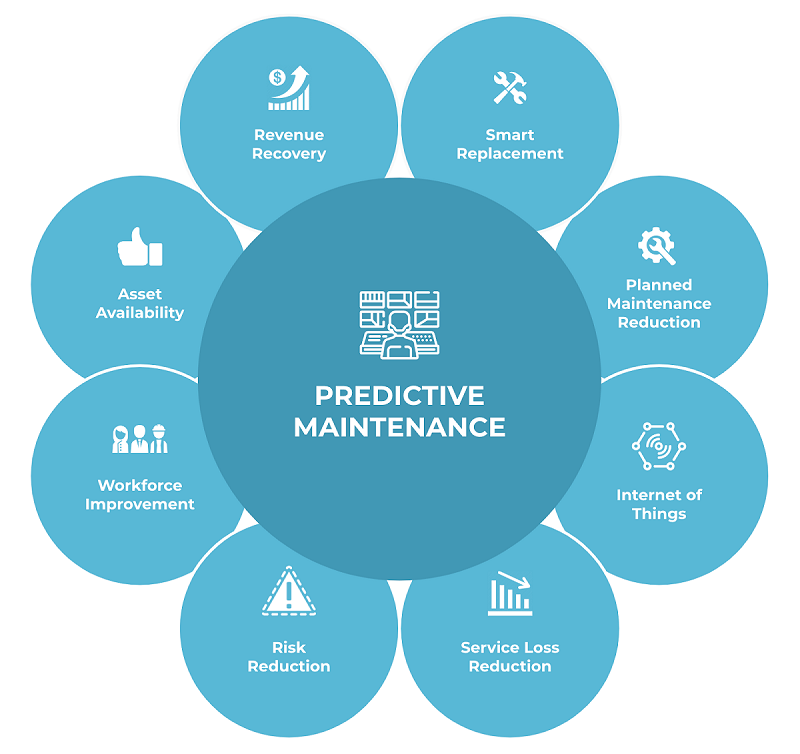
The global market for predictive maintenance is a highly competitive and complex arena, where market share is contested by a diverse array of companies, from century-old industrial giants to agile software startups. A detailed analysis of the Predictive Maintenance Market Share reveals a landscape with no single dominant player, but rather a stratified ecosystem with several key categories of competitors, each leveraging its unique strengths. The first and most powerful group consists of the large industrial automation and original equipment manufacturers (OEMs). Companies like Siemens, General Electric (GE), Honeywell, Schneider Electric, and Rockwell Automation command a significant share of the market. Their primary advantage is their deep, ingrained domain expertise and their existing, trusted relationships with industrial customers. They have been building and servicing the very machines that PdM aims to monitor for decades. They are now embedding IoT connectivity and analytics capabilities directly into their own equipment and offering PdM solutions like Siemens' MindSphere or GE's Predix as a value-added service, creating a powerful, integrated offering that is difficult for pure software players to replicate. Their strategy is to own the "edge" and leverage their intimate knowledge of the physical asset.
A second major force vying for market share is the cohort of enterprise software and cloud computing behemoths. This category is led by Microsoft (with its Azure IoT platform), Amazon Web Services (AWS), Google Cloud, and major enterprise software providers like IBM (with Maximo) and SAP. Their strength lies in providing the scalable, powerful, and relatively low-cost platform infrastructure upon which almost all modern PdM solutions are built. They offer a comprehensive suite of tools, from IoT device management and data storage to advanced machine learning and AI services, that allow companies to build their own custom PdM solutions. They are not necessarily selling a pre-packaged "PdM product" but are providing the essential "picks and shovels" for the gold rush. Their go-to-market strategy is often partner-centric, working closely with system integrators and OEMs to ensure their cloud platforms become the foundational layer for the industry. Their massive scale, global reach, and R&D budgets make them formidable players who effectively control the infrastructure layer of the market.
A third, and perhaps the most innovative, segment of the market is comprised of pure-play predictive maintenance software vendors and well-funded startups. Companies like C3 AI, Augury, and a host of others have focused exclusively on solving the PdM problem with cutting-edge technology. Their competitive advantage is their agility, deep focus, and often superior algorithmic performance. Unlike the industrial giants who may be encumbered by legacy systems, these companies are cloud-native and AI-first. They often offer a more user-friendly, turnkey solution that can be deployed faster than building a custom solution on a cloud platform. Many of these players have also pioneered the "PdM-as-a-Service" business model, installing their own sensors and charging a subscription fee for monitoring and alerts, which dramatically lowers the barrier to entry for customers. While their individual market share may be small, their collective impact is significant, as they are often the ones pushing the boundaries of the technology and are frequently acquisition targets for the larger players looking to bolster their own capabilities.
Finally, it is impossible to discuss market share without acknowledging the crucial role of system integrators (SIs) and consulting firms. Companies like Accenture, Deloitte, and Capgemini, as well as smaller, specialized engineering firms, may not have their own PdM product, but they command a huge share of the overall market spending. They are the "connective tissue" of the ecosystem, providing the strategic guidance, implementation services, and change management support that are essential for a successful, large-scale PdM deployment. They help clients navigate the complex landscape of vendors, select the right technologies, integrate them with existing enterprise systems (like CMMS and ERP), and train the workforce to use the new tools. For many large enterprises, the journey to predictive maintenance begins with a consulting engagement, making these service providers powerful influencers and major beneficiaries of the market's growth, capturing a significant portion of the total contract value associated with PdM initiatives.
Explore More Like This in Our Regional Reports:

 English
 Arabic
 Spanish
 Portuguese
 Deutsch
 Turkish
 Dutch
 Italiano
 Russian
 Romaian
 Portuguese (Brazil)
 Greek
