


Engineering Fluid Systems for Modern Agriculture
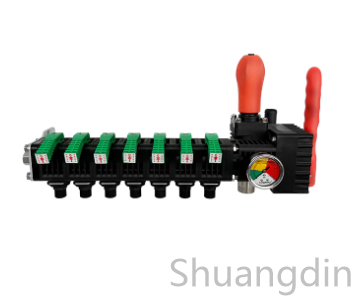
Chemical liquid handling places particular demands on agricultural equipment because the pumping system must accommodate both mechanical movement and interaction with the working medium. A Diaphragm Pump For Pesticides uses a flexible membrane to separate the liquid chamber from the drive mechanism, creating an architecture that connects material engineering with controlled fluid transfer. This separation is an important consideration when manufacturers develop equipment for crop protection applications.
The diaphragm is central to the technology because it repeatedly moves within the pumping chamber. Each movement changes the available chamber volume and contributes to the intake and discharge stages of the pumping cycle. Since the membrane directly separates the liquid from the mechanical section, its material must be selected according to both flexibility requirements and chemical compatibility.
Elastomer selection therefore deserves careful attention during equipment development. Agricultural formulations can contain active chemical ingredients and supporting compounds that interact differently with various materials. A suitable membrane material should be considered in relation to the intended working liquid, repeated flexing, environmental exposure, and long-term mechanical behavior. Material compatibility is not simply a question of preventing visible deterioration; it also relates to preserving the functional characteristics of the diaphragm.
Other wetted components require similar consideration. Valves, seals, chamber surfaces, and connection points may all come into contact with the agricultural liquid. If one component is poorly matched to the working environment, it can influence the reliability of the entire fluid pathway. Engineers therefore benefit from evaluating the materials of all liquid-contacting parts as one integrated system.
The valve mechanism is responsible for controlling the direction of liquid movement. When the diaphragm changes chamber volume, pressure conditions change accordingly. The inlet valve responds to the intake stage, while the outlet pathway supports discharge. This coordinated action allows the pump to move liquid without requiring a rotating impeller or other continuously immersed mechanical element.
Manufacturing technology has a direct influence on how consistently this mechanism operates. The diaphragm needs controlled forming and material distribution so that its repeated movement remains predictable. Valve components also require accurate production because their seating and movement influence fluid transfer. Consistent manufacturing can reduce unwanted variation between individual components and support more dependable assembly.
The pump housing provides structural support while also defining the internal fluid pathway. Material selection may involve resistance to the agricultural environment, compatibility with the working liquid, and practical manufacturing requirements. External surfaces can encounter moisture, dust, soil, and cleaning processes, while internal surfaces may experience continuous liquid exposure. These two environments should be considered separately during engineering.
Fluid pathway design is another important technology factor. Smooth transitions, suitable internal geometry, and carefully designed connections can help reduce unnecessary disruption as liquid moves through the system. Filtration may also be integrated to protect valves and other sensitive areas from unwanted particles. Such details show why the pump should be designed as part of the complete agricultural machine rather than considered as an independent component.
Maintenance considerations can also be incorporated into material and mechanical design. Agricultural equipment often requires cleaning after use, particularly when working liquids may leave residues. Accessible components and practical fluid pathways can make inspection and cleaning more manageable. Material choices should also account for the cleaning methods expected during routine equipment care.
Modern crop protection equipment may combine mechanical pumping with electronic controls. Automated valves, sensors, and control systems can coordinate application activities, but the physical movement of liquid still depends on the underlying pumping mechanism. Reliable diaphragm movement and predictable valve operation therefore remain important even as agricultural machinery becomes increasingly automated.
For manufacturers developing crop-treatment systems, the relationship between chemical compatibility, membrane flexibility, valve construction, housing materials, and production technology provides a useful foundation for equipment design. A Diaphragm Pump For Pesticides can serve as an integrated fluid-transfer component when these factors are evaluated together, and SHUANG DIN Co Ltd provides further information about its agricultural diaphragm pump solutions at https://www.agriculturaldiaphragmpump.com/about/.

 English
 Arabic
 Spanish
 Portuguese
 Deutsch
 Turkish
 Dutch
Dutch
 Italiano
 Russian
 Romaian
 Portuguese (Brazil)
 Greek
Greek
