


The Digital Jobsite: The Central Role of the Construction Software Market Platform
The Shift from Siloed Tools to an Integrated Platform
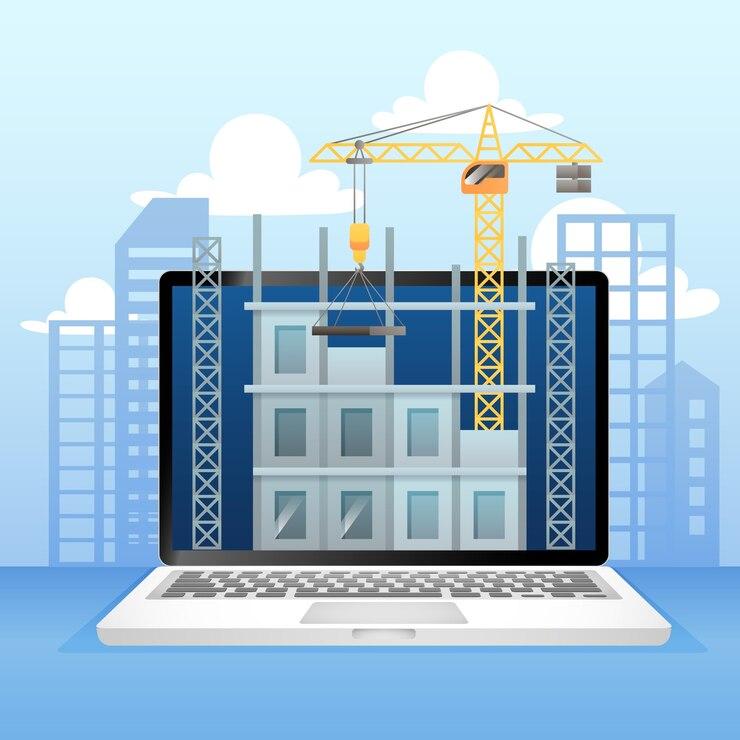
The most profound transformation in the construction software market has been the evolution from a collection of disparate, siloed "point solutions" to the rise of the integrated, cloud-based platform. In the past, a construction company would use a patchwork of different software for different tasks—one for bidding, another for scheduling, a third for accounting—with little to no communication between them. This created data silos, required duplicate data entry, and made it impossible to get a holistic view of a project's health. The modern Construction Software Market Platform solves this fundamental problem. It acts as a central "operating system" for the construction project, providing a single source of truth where all project data and communications reside. By bringing together functionalities for project management, document control, financial management, and field operations onto a single, unified platform, it breaks down the traditional barriers between the office and the job site, and between the various stakeholders on a project, enabling a new level of collaboration and data-driven decision-making.
Core Components of a Modern Construction Platform
A modern, comprehensive construction management platform is built around several core, integrated components. At its heart is a Project Management module, which includes tools for scheduling, resource allocation, and task management. This is tightly integrated with a Document Management system, which serves as the central repository for all project documents, including plans, specifications, contracts, and submittals, ensuring everyone is working from the latest version. The Financial Management component is another critical pillar, providing tools for job costing, budgeting, change order management, and invoicing. This allows project managers to have real-time visibility into the financial health of their projects. The Field Management component, delivered through mobile applications, is what connects the job site to the platform. It enables workers in the field to submit daily logs, fill out safety checklists, document issues with photos, and access the latest project plans directly from their tablets or smartphones. Underpinning all of this is a Common Data Environment (CDE), the shared database that ensures all modules are accessing and updating the same set of project information, creating the single source of truth.
The Power of a Unified Data Model and Ecosystem
The true power of a construction software platform lies in its unified data model and its open ecosystem. Having a unified data model means that data entered in one part of the platform is instantly available and contextually linked in all other parts. For example, when a field worker documents an issue (like a design clash) with a photo in the field management app, that issue can be instantly converted into a Request for Information (RFI) in the project management module, and any associated costs can be tracked as a potential change order in the financial module. This seamless flow of information eliminates the delays and miscommunications that occur when data is trapped in separate spreadsheets or email chains. Furthermore, leading platforms are not closed systems; they are built with an open API architecture that fosters a rich ecosystem of third-party integrations. This allows a construction company to connect their core platform to other specialized tools they use, such as their accounting software, estimating software, or drone data processing service. This ability to act as the central hub, integrating data from across a company's entire technology stack, is a key characteristic of a successful platform.
The Role of BIM as a Foundational Platform Element
For many modern construction platforms, Building Information Modeling (BIM) is not just an integration; it is a foundational element. BIM is the process of creating and managing a digital representation of the physical and functional characteristics of a building. This intelligent 3D model becomes the central reference point for the entire project. Modern construction management platforms are designed to ingest and interact with these BIM models directly. This has profound implications. Project managers in the office can use the model to visualize the construction sequence and coordinate trades. Workers in the field can pull up the 3D model on a tablet to understand exactly how a complex assembly should be installed. The platform can link RFIs, issues, and daily logs directly to specific objects within the model, providing powerful spatial context. The ultimate vision is a "digital twin," where the BIM model is continuously updated with data from the field throughout construction and then handed over to the building owner to be used for facility management. The integration of BIM transforms the platform from a simple project management tool into a true lifecycle management system for the built asset.
Explore More Like This in Our Reports:
Cloud Security In Manufacturing Industry Market

 English
 Arabic
 Spanish
 Portuguese
 Deutsch
 Turkish
 Dutch
 Italiano
 Russian
 Romaian
 Portuguese (Brazil)
 Greek
